Monday, November 2, 2015

November 2015 - Featured Playlist: How the East Was One


One of the most exciting repercussions of a rapidly shrinking world is that disparate cultures can more easily find common ground in creating new art. For centuries music in the East developed separately from the West, establishing its own system of harmony and melody, but as each side of the planet discovered the other, this became reflected in musical development.

A great number of talented composers from China, Japan, and Korea have come to prominence, either by blending their own cultural sounds with Western classical music, or by blazing entirely new trails informed by their multicultural paradigm. This playlist is a wonderful way to experience a truly global sound, an exploration into How the East Was One with the West for these gifted composers.

To hear the playlist, access NML as usual, go to the Playlists section, and select the Playlist of the Month folder under the Themed Playlists tab. If you are on your institution's premises, you may also be able to access it if you CLICK HERE.

1. Various composers – The Yellow River Piano Concerto: IV. Defend the Yellow River – Based off of Xian Xinghai’s Yellow River Cantata, this concerto was a prominent example of music under Mao Zedong’s Cultural Revolution of the 1960s and 70s. The work has no fewer than six different composers attached to it, which itself is a representation of the Communist ideology of its time. Along with the Butterfly Lovers’ Violin Concerto, it is one of the best-known Chinese classical works.  

2. Zhou Long / Chen Yi – Symphony, “Humen 1839”: IV. Allegro trascinante – Prominent composers Zhou Long and Chen Yi teamed up to create this symphony honoring the Chinese people who fought Britain’s illegal opium trade. The town of Humen was, in 1839, the setting of a Tea Party-esque incident where 1,000 tons of British opium was seized and burned, an event that sparked the First Opium War.

3. Nie Er – Dance of the Golden Snake – Nie Er is best known as the composer of China’s national anthem, though in his two-year career he composed quite a bit of music that was popular with the Communist Revolution. Despite his short life (he drowned at 25), he holds a respected place in Chinese cultural history for his songs protesting Japanese aggression in the years leading up to World War Two.


4. Tan Dun – Double Bass Concerto, “The Wolf”: III. Allegro vivace – Premiered in January 2015, Tan Dun’s Double Bass Concerto, “The Wolf”, receives its first recording this year as well. It depicts the wolves that roam the countryside of China and Tibet, and their important contributions to their ecosystem.


5. Bright Sheng – 7 Tunes Heard in China: No. 7 Tibetan Dance – Bright Sheng was born in China but has lived in the United States since 1982. As the title implies, this cello suite, premiered by none other than Yo-Yo Ma, makes use of traditional melodies from across China. Included here is the seventh tune, which employs a popular folk melody from Tibet.


6. Tōru Takemitsu – 3 Film Scores: III. Face of Another: Waltz – Japanese composer Tōru Takemitsu took his inspiration from sources as diverse as traditional Japanese music and John Cage. His career began under more avant-garde ideals, but later it progressed to what he called a “sea of tonality” in which a predetermined series of notes would form the tonal base for a work. Over the years he also scored more than ninety films.
7. Kosaku Yamada – Symphony in F Major, “Triumph and Peace”: III. Poco vivace – Yamada was a German-trained Japanese composer during the 20th century. He composed over 1400 works, over half of which were lieder. As a conductor, he was instrumental in introducing many classics of Western music to Japan, including Gershwin’s An American in Paris, Wagner’s Siegfried Idyll, Sibelius’ Finlandia, and Dvořák’s Symphony No. 9.

8. Yasushi Akutagawa – Trinita Sinfonica: III. Finale: Allegro assai – Akutagawa began his career shortly after World War II, and it included a time spent illegally in the Soviet Union, where he befriended Shostakovich, Khachaturian, and Kabalevsky. When he returned to Japan, not only did he become an established composer, but a television personality and educator as well.


9. Kui Dong – Spring, Summer, Autumn, and Winter: I. Spring – Chinese composer Kui Dong initially only studied music under her mother’s insistence; her mother had been a musician, and as the two older siblings had not taken up music, young Kui was her mother’s last hope. As a composition student she got work collecting folk songs from remote villages, and this would have a profound effect on her.


10. Isang Yun – Duo for Cello and Harp: II. --- - Korean composer Isang Yun was held as a POW by the Japanese in World War II, after which he started a home for war orphans. Following the Korean War he moved to Germany to pursue music. After returning from a visit to North Korea, he was kidnapped by the South Korean secret service and accused of espionage, freed only after a petition signed by 200 artists, including Stravinsky and Ligeti.

11. Unsuk Chin – Violin Concerto: III. --- - Chin is a South Korean composer now based in Germany. Her music draws little influence from her Korean heritage, but rather from sources as diverse as Bartók, Debussy, Xenakis, Ligeti, electronic music, Balinese Gamelan, and Medieval composers. The concerto featured here is one of her more widely performed works, programmed in 14 different countries around the world.


12. Akira Ifukube – Godzilla, King of the Monsters: Main title theme – Born in Hokkaido, Ifukube was initially influenced by both his Japanese heritage and the Ainu people around him. Though he would end up studying forestry at university, he was first inspired to compose after hearing Stravinsky’s The Rite of Spring. He is most remembered for his film scores, especially those for Toho’s Godzilla movies.


13. Gordon Shi-Wen Chin – Symphony No. 3, “Taiwan”: III. Upsurge – Chin is one of the most prolific composers in Taiwan, responsible for a diverse array of concertos, four symphonies, a cantata, an opera, and much chamber and solo music. He is currently on faculty at the National Taiwan Normal University.


14. Sadao Bekku – Symphony No. 1: IV. Allegro con brio – Twentieth-century Japanese composer Sadao Bekku composed a wide array of music across several genres. He was influenced to a degree by jazz music, and his best-known work is his score for the cult film Matango, alternately known as Fungus of Terror or Curse of the Mushroom People.


15. Keiko Abe – Kazak Lullaby – Keiko Abe is a pivotal figure in the marimba world; not only did she contribute a great deal to technique and the repertoire, but she also assisted in the development of the modern five-octave concert marimba. She has been a tireless champion of the instrument, both in her native Japan and around the world.


16. Uzong Chae – Prelude No. 8 – Korean composer Uzong Chae has studied composition in Seoul, Salzburg, and Paris. The music he composes is influenced by everything from early music to Korean theatre to modern pop. His Preludes are based around a variety of techniques and styles, with No. 8 composed in a minimalist idiom.


17. Takashi Yoshimatsu – Symphony No. 4: IV. Finale: Allegro molto – Presto – Yoshimatsu did not start out studying music; in fact, he was a professor of technology initially, before quitting to join a Pink Floyd-inspired band. His classical compositions are heavily influenced by jazz, progressive rock, traditional Japanese music, and electronic music. He has composed at least six symphonies, eleven concertos, and more.


18. Various composers – The Red Detachment of Women: Act III. Dance of the Slave Girls, Dance of the Li Tribe, The Civil Corps’ Broadsword Dance – As with other Chinese works popular under Communist rule, this ballet is a collaboration by a number of composers. It has been called the first Revolutionary Ballet by the Chinese establishment, and it includes some of the best-known melodies in China.


19. Chi Liu – My Motherland – This patriotic tune was composed for the Chinese film Sangkamryung, which told the story of a three-year battle the Chinese People’s Volunteer Force fought in Korea. The first part, for soprano, tells of the beauty of the motherland and the soldiers’ love for their people. The second part, for choir, is a display of passion and grandeur.


20. Joe Hisaishi – Hana-bi (Fireworks): Hana-bi – Hisaishi is best-known for his film scores, especially those for animator Hayao Miyazaki, which include Princess Mononoke, Spirited Away, Howl’s Moving Castle, and Ponyo. Featured here is the main theme for the film Hana-bi, the score for which won him the Japanese equivalent of an Oscar in 1999.


Each month, Naxos Music Library presents a themed playlist for our subscribers to enjoy. We know that a database of over 1.7 million tracks can be a bit daunting, so we'd like to highlight some of the amazing music that is available to you. Let it kickstart discovery! 

Friday, October 2, 2015

Opening Notes: October 2015 - New Release Playlist

We're kicking off a new monthly playlist for your enjoyment. We've sifted through all the new releases for October 2015, and we're highlighting our favorites. Some of these are debut recordings of brand new works, while others are fresh takes on standard repertoire. If you're like us and are constantly craving something to discover, take a spin through these tracks to get a taste of what is now available to you in NML. And if you hear something you love, click on the cover art in the player window to be taken directly to the full album!

To hear the playlist, access NML as usual, go to the Playlists section, and select the Opening Notes folder under the Naxos Music Library Playlists tab. If you are on your institution's premises, you may also be able to access it if you CLICK HERE.


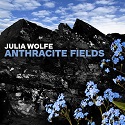
Julia Wolfe
Anthracite Fields: IV. Flowers
Bang On A Can All-Stars; Trinity Wall Street Choir
Cantaloupe - CA-21111 
Jean Sibelius
Swanwhite: Act II: Andantino
Turku Philharmonic; Leif Segerstam
Naxos - 8.573341
Franz Schubert
Symphony No. 8, "Unfinished": I. Allegro moderato
Vienna Symphony Orchestra; Philippe Jordan
Wiener Symphoniker - WS009

Mieczysław Weinberg
Violin Concertino: I. Allegretto cantabile
Amadeus Chamber Orchestra of Polish Radio
CPO - 777887-2
Antonin Dvořák
Cello Concerto: I. Allegro
German Radio Saarbrücken-Kaiserslautern Phil.
Oehms Classics - OC1828

Ludwig van Beethoven
Sonata No. 8 "Pathetique": II. Adagio cantabile
Boris Giltburg
Naxos - 8.573400
J.S. Bach
Magnificat in E-flat Major: Magnificat
Dunedin Consort; John Butt
Linn - CKD469
John Mackey
Kingfishers Catch Fire: II. Kingfishers
University of Texas Wind Ensemble; Jerry Junkin
Naxos - 9.70255

Bruno Maderna
Requiem: Part I: Kyrie eleison
Robert Schumann Phil.; Leipzig MDR Radio Choir
Capriccio - C5231 
Jake Heggie
I Shall Not Live in Vain
Susan Graham; John Alexander Singers
Delos - DE3484

Sergey Rachmaninov
Morceaux de fantaisie: No. 2. Prelude
James Rhodes
Signum - SIGCD425
  J.S. Bach
Fugue in D Minor, BWV 565
Masaaki Suzuki
BIS - BIS-2111

Bohuslav Martinů 
Harpsichord Sonata: III. Allegretto
Christopher D. Lewis
Naxos - 8.573364 
Walker Saul
A Christmas Symphony: IV. Gloria
Ukraine National Symphony; Theodore Kuchar
Naxos - 8.559791

Joachim Nikolas Eggert
Symphony No. 1: IV. Finale: Allegro vivace
Gävle Symphony; Gérard Korsten
Naxos - 8.572457
Édouard Lalo
Chant breton
Tassis Christoyannis; Johannes Grosso
Aparte - AP110

Krzysztof Pendereci
A Sea of Dreams Did Breath On Me: No. 6 The Angelus
Warsaw Philharmonic Choir and Orchestra; Antoni Wit
Naxos - 8.573062

Christopher Tarnow
Theremin Sonata No. 2: III. Fugato
Carolina Eyck; Christopher Tarnow
Genuin - GEN15363
Eleanor Cory
String Quartet No. 3: III. ---
Momenta Quartet
Naxos - 8.559784

Lars Graugaard
Three Places
NYU Contemporary Music Ensemble
Dacapo - 6.220628
J.S. Bach
Cello Suite No. 1: I. Prelude
Matt Haimovitz
Pentatone - PTC5186555 
Robert Schumann
Das Paradies und die Peri: III. O heil'ge
London Symphony; Simon Rattle
LSO0782
Maurice Ravel
Ma mère l'oye: Le jardin féerique
Lyon National Orchestra; Leonard Slatkin
Naxos - 8.660336
Nicholas Medtner
4 Skazki: No. 1 Allegretto frescamente
Maria Walzer
Orlando Records - OR0017


Each month, Naxos Music Library presents a new release playlist for our subscribers to enjoy. We know that a database of over 1.6 million tracks can be a bit daunting, so we'd like to highlight some of the amazing music that has become available to you just this month. Let it kickstart discovery!


Thursday, October 1, 2015

October 2015 - Featured Playlist: Macabre Cabaret


Classical music has well earned its reputation as the perfect accompaniment for a peaceful evening or a soothing slumber, but to pigeonhole it as such would discount the tremendous variety it has to offer. It can also be an expression of the mystical, the spectral, even the terrifying.

Whether you celebrate Halloween as a princess, a zombie, or—better yet—a zombie princess, or if you’re stocking up on candy corn and chocolate pumpkins to hand out to the neighborhood kids, we’ve got the soundtrack for you. Let these twisted tunes and haunted harmonies be the house band for your own Macabre Cabaret.

To hear the playlist, access NML as usual, go to the Playlists section, and select the Playlist of the Month folder under the Naxos Music Library Playlists tab. If you are on your institution's premises, you may also be able to access it if you CLICK HERE.

1. Thomas Newman – A Series of Unfortunate Events: The Bad Beginning – Author Daniel Handler, under the pen name Lemony Snicket, penned 13 books for his popular A Series of Unfortunate Events. These stories were turned into a film starring Jim Carrey, and Thomas Newman’s score set the perfect tone for the movie’s dark sense of humor.


2. Wojciech Kilar – Bram Stoker’s Dracula: The Brides – Wojciech Kilar was a successful film composer from Poland, with one of his best-known scores accompanying Francis Ford Coppola’s 1992 hit Bram Stoker’s Dracula. The slow-burning music composed for Dracula’s brides is spooky enough to fill the listener with dread without even knowing the context of the film.


3. Franz Liszt – Totentanz – Franz Liszt was known to have a considerable fascination with death, even visiting jails to observe those who’d been condemned to death. He was also in attendance at the premier of Hector Berlioz’ Symphonie fantastique, a work that had a profound influence on him. These two interests converge in his Totentanz (Dance of the Dead), which follows Berlioz’ example and incorporates the medieval Dies Irae melody.  
4. Giuseppe Verdi – Messa da Requiem: Dies irae, dies illa – Upon the death of Rossini, Verdi instigated a requiem in his memory, with different composers contributing each section. The finished work was never performed in Verdi’s lifetime, but upon the death of writer Alessandro Manzoni he expanded his portion of the Rossini requiem into a full piece in Manzoni’s honor. It went on to become one of the greatest choral works of the Romantic Era.

5. Carl Orff – Carmina Burana: Fortuna Imperatrix Mundi: Fortune plango vulnera – Orff, shortly after the premiere of this work, wrote to his publisher: "Everything I have written to date, and which you have, unfortunately, printed, can be destroyed. With Carmina Burana, my collected works begin." The opening section is familiar to everyone through its frequent use in film and television, but the rest of it, including this section, is well worth knowing.

6. Niccolò Paganini – 24 Caprices: No. 5 in A Minor – Paganini was a rock star of his day, becoming wildly famous and wealthy as a violinist of unparalleled skill and showmanship. He was so talented that a rumor surfaced that he had sold his soul to the devil in exchange for his ability! He took the violin to a level it had never seen before, and his 24 Caprices would influence many composers to come.


7. Léon Boëllmann – Suite Gothique: IV. Toccata – A composer of considerable potential who died when he was only 35, Boëllmann is primarily known today for his Suite Gothique, which is a staple of the organ repertoire. He was also a respected teacher and critic. He left behind three young children when he died, and his daughter Marie-Louise went on to be a noted organ teacher herself.


8. Francis Poulenc – Organ Concerto: I. Andante, II. Allegro giocoso – Poulenc had never composed for the organ before this work was commissioned, and he studied the music of Bach and Buxtehude to familiarize himself with the instrument. This Baroque influence can be heard in the piece, which opens with a chilling Andante that has been the soundtrack to many a spooky scenario.


9. Gloria Coates – Symphony No. 1, “Music on Open Strings”: I. Theme and Transformation – Gloria Coates has made a name for herself through her glissando-heavy composition style. It is music that sounds unsteady, even frightening in small segments, yet combines into an orderly, stable whole. To date she has composed fourteen symphonies, making her the most prolific female symphonist in history.


10. George Crumb – Black Angels: 13 Images from the Dark Land, “Images I”, Part III: No. 10 God-music – The Kronos Quartet was formed after violinist David Harrington heard Black Angels for the first time and fell in love with its extended techniques and mysterious sound world. This work is written for an amplified string quartet, and the members are also expected to play pitched crystal glasses and tam tams.


11. J.S. Bach – Toccata and Fugue in D Minor, BWV 565: Toccata – This piece is one of Bach’s most popular, yet there’s a fair chance that he is not the true composer of it. The original score has been lost, and we can only go with the word of the organist who owned the oldest copy. Whatever the case, its dramatic opening is a suitable soundtrack for any haunted house.


12. Manuel de Falla – El amor brujo: Danza ritual del fuego – De Falla’s ballet El amor brujo tells the story of an Andalusian gypsy woman who is forced to marry a man she does not love. Her husband dies, freeing her to be with her lover, but her husband’s ghost haunts her still. She ultimately undertakes a ritual fire dance, which lures the specter into the flames and releases her from its haunting.


13. Alberto Ginastera – Piano Concerto No. 1: IV. Toccata concertata – This final movement of Ginastera’s First Piano Concerto comes in the form of a malambo, a popular Argentinian dance that is roughly a more virile, macho form of tap dance. It is performed by men only, giving them a chance to express themselves through dance without having to support a partner. Ginastera’s violent piece is a spectacular showcase for the soloist.


14. Camille Saint-Saëns – Danse Macabre – Danse Macabre depicts a legend in which Death appears at midnight on Halloween and wakes up the dead to dance as he plays his violin. You can hear the tolling of the clock striking twelve, followed by the entrance of the solo violin playing a tritone, also known as the devil’s interval. The dead emerge to dance the night away before returning to the grave at dawn.


15. Rued Langgaard – Symphony No. 9, “From Queen Dagmar’s City”: Ribe Cathedral – The honey badger of Scandinavian composers, Langgaard was harshly dismissed by the Danish musical establishment of his day, but in recent years he has gained considerable notoriety. He was certainly influenced by Wagner and Strauss, yet his work contains a remarkable originality characterized by dramatic mood swings and vivid imagery.

16. Sergey Prokofiev – Cinderella Suite No. 1: VII. Cinderella’s Waltz – Many a child likes to dress up as Cinderella for Halloween, and this waltz by Prokofiev makes the perfect accompaniment. Not only does it have a memorable melody that glides across the dance floor, but it also has an eerie minor-key twist to it that makes it suitable for a Cinderella that turns into something else entirely at the stroke of midnight.


17. Dmitry Shostakovich – Symphony No. 10: II. Allegro – Mostly composed in the months following the death of Stalin, Symphony No. 10 earned Shostakovich—not for the first time—the scrutiny of the Soviet establishment. In historical context it’s hard not to imagine the tumultuous second movement as an indictment of Stalin’s leadership; whether or not this was intended, it certainly paints a striking image of terror and violence.


18. Gustav Holst – The Planets: VI. Uranus, the Magician – Gustav Holst was fascinated by astrology, and the seven movements of The Planets are intended to be musical portraits of the astrological traits he associated with each planet. He ascribed the qualities of a mischievous magician to Uranus, and the music is accordingly vulgar and grotesque.


19. Roxanna Panufnik – Beastly Tales: The Crocodile and the Monkey: Death by drowning, death by slaughter – Panufnik’s work for singers and orchestra is based on a story by Indian author Vikram Seth in which a crocodile’s wife convinces him to invite his friend, a monkey, over for dinner—or more accurately, to become dinner. Does our monkey friend survive? You’ll have to hear this morbid tale to find out!


20. Alexandre Desplat – Harry Potter and the Deathly Hallows, Part II: Snape’s Demise – He was the villain everyone loved to hate, but in the end Severus Snape’s undying, unrequited love for Harry’s mother led him to do the right thing as he lay dying. Halloween is the perfect time for kids—and, let’s face it, adults—to go out in their wizarding best. Which house will you be supporting?


Each month, Naxos Music Library presents a themed playlist for our subscribers to enjoy. We know that a database of over 1.6 million tracks can be a bit daunting, so we'd like to highlight some of the amazing music that is available to you. Let it kickstart discovery!