Wednesday, June 1, 2016

June 2016 - Featured Playlist: Behind the Iron Curtain


As part of its Cold War strategy, the Soviet Union established artistic restrictions that it felt would create a unique cultural identity and unify its people. Throughout Communism’s reign over USSR and Eastern Europe—under the Zhdanov Doctrine (1946-1953) especially—the ability of composers to pursue their art was heavily censored, and they were forced to choose between conforming to the musical tenets foisted upon them or staying true to their art at the risk of being blacklisted, imprisoned, or worse.

For our parents’ and grandparents’ generations, the specter of Soviet Communism was a serious concern not unlike the fear of terrorism today. Like these composers, if we have to choose between freedom and security, what will we decide? It’s important to examine this time in history, both for its influence over art and for the lessons it can offer our present world. Lest we forget, let’s have a look at what life was like Behind the Iron Curtain.

To hear the playlist, access NML as usual, go to the Playlists section, and select the Playlist of the Month folder under the Themed Playlists tab. If you are on your institution's premises, you may also be able to access it if you CLICK HERE.

1. Dmitry Shostakovich – Symphony No. 10: II. Allegro – Had Shostakovich not been so hugely popular in the Soviet Union, he might have endured even greater opposition than he did. Even still, he was officially denounced under the Zhdanov Doctrine, and his career was spent trying to straddle that line between appeasing the censors and maintaining his artistic integrity, at times even sneaking his opposition into the music right under the censors’ noses.
 
2. Sergey Prokofiev – The Year 1941: I. In the Struggle – Like Shostakovich, Prokofiev was denounced under the Zhdanov Doctrine, and his symphonic suite The Year 1941 was among his works that were blacklisted. Prokofiev lived the remainder of his life under considerable artistic restrictions, and in a sad twist, he died on the same day as Stalin, missing out on the cultural thaw to come.

3. Georgy Sviridov – Metel (The Snowstorm): Troika – Sviridov was a composer who managed to avoid conflict with Soviet censors thanks to the nationalist spirit of his music. He composed a considerable amount of gorgeous choral music, his most famous setting texts by Pushkin. Sviridov also composed music for a film adaptation of Pushkin's story "Metel (The Snowstorm)".
4. Mieczysław Weinberg – Symphony No. 6: III. Allegro molto – Weinberg moved to the Soviet Union in 1939, avoiding the fate that befell most of his Polish-Jewish family during the Holocaust. However, he was imprisoned in 1953 for “Jewish bourgeois nationalism” and released only after Shostakovich’s intercession and the death of Stalin. Some refer to him as the “third great Soviet composer, along with Prokofiev and Shostakovich”.

5. Aram Khachaturian – Spartacus Ballet Suite No. 2: I. Adagio of Spartacus and Phyrigia – Khachaturian was mostly accepted by the Soviet establishment, though he was briefly denounced under the Zhdanov Doctrine—likely more for political reasons than artistic. He is the best-known composer from Armenia, and he incorporated a great deal of folk melodies from that region.

 
6. Grażyna Bacewicz – Overture – Bacewicz chose to play along with the Soviet tenets of “social realism”, which meant that most of her earlier compositions were neo-classical and folk-inspired. There weren’t many Polish composers under Communism who could create large-scale works that passed censorship, but Bacewicz was one of them.


7. Nikolay Myaskovsky – Symphony No. 23: III. Allegretto vivace – Myaskovsky, a close friend of Prokofiev, chose not to leave the USSR, nor did he express his personal feelings about Stalin within his music. Even still, he didn’t escape denunciation under the Zhdanov Doctrine, and he refused to cooperate with requests to repent of his “anti-proletarian” music. As a result, he was not officially rehabilitated until after his death.


8. Reinhold Glière – Coloratura Soprano Concerto: II. Allegro – As the final living representative of pre-revolution Russian nationalism, Glière enjoyed immunity from the cultural purges brought by the Soviets. This meant that he didn’t need to move to the West as others did around that time, and he wasn’t pushed to the East like some who stayed. He did voluntarily take trips east, though, to give concerts in Siberia and work in Uzbekistan.

9. Arvo Pärt – Tabula Rasa – As part of a later generation of composers, Estonian composer Arvo Pärt enjoyed slightly less-strict limitations on composition, even ultimately emigrating to Vienna and Berlin (though not without a prolonged battle with Soviet officials). Still, he was accused of “susceptibility to foreign influences” by Zhdanov flunky Tikhon Khrennikov in 1962, though he went on to win a prestigious composition prize only nine months later.

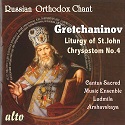
10. Alexander Gretchaninov – Liturgy of St John Chrysostom No. 4: We have seen the True Light – A protégé of Rimsky-Korsakov, Alexander Gretchaninov was one of the earliest composers to flee Communist restrictions; not only were they a threat to him artistically, but they were at odds with his deep religious faith. He ultimately spent the final thirty years of his life in France and the United States, watching World War Two and Stalin’s reign from afar.

11. Yury Shaporin – The Decembrists: Soldiers’ Chorus – One result of Stalin’s restrictions on music was that very few operas of any merit were produced. Shaporin’s The Decembrists took over 25 years to come to fruition, in part because of constant demands by the authorities for revision, and it wasn’t premiered until a few months after Stalin’s death. Despite the rampant censorship, it was good enough to gain the support of Shostakovich, who was usually no champion of Shaporin’s music.

12. Tikhon Khrennikov – Much Ado…Because of Hearts: Kanzone des Bretunkenen – One of the prominent villains in Soviet music was Tikhon Khrennikov, who as Secretary of the Union of Soviet Composers worked tirelessly to promote Zhdanov’s ideals and stamp out modernism and “anti-proletarian” music. Naturally, his music was regularly presented as a reference for Soviet realism, and it has largely vanished since the collapse of the USSR.

13. Lev Knipper – Meadowland (Polyushko Polye) – A prolific composer who managed to avoid censorship, Knipper also served as a secret agent for the USSR during World War Two. The Kremlin recruited musicians, ballerinas, and acrobats to assassinate Nazi leaders should Moscow fall and the Germans attempt to organize celebratory concerts. Knipper was charged with killing Hitler himself should the opportunity arise.


14. Dmitry Kabalevsky – Symphony No. 1: II. Allegro molto agitato e con spirito – Kabalevsky was another composer whose association with the Zhdanov Doctrine was probably more political than artistic. Despite having very conservative and populist musical tendencies, he was slated for denunciation before his official connections succeeded in getting his name removed from the list.


15. Vladimir Jurowski – Symphonic Pictures, “Russian Painters”: IV. Morning of the Streltsy’s Execution – After Stalin died, Nikita Khrushchev took over the USSR, and he brought in a brief period known as Khrushchev’s Thaw. Restrictions on art were (slightly) loosened, and in 1956 there was held an exhibition in St Petersburg of paintings previously kept unseen. Jurowski used seven of these works as inspiration for his Symphonic Pictures.

16. Galina Ustvolskaya – Bol’shoy Duet, “Grand Duet”: II. – — Ustvolskaya’s laser-like work was too unusual to gain much performance in the USSR, but it was also too unusual to fit neatly into what the censors liked to prohibit. Shostakovich, her teacher, said, “I am convinced that the music of G.I. Ustvolskaya will achieve worldwide renown, to be valued by all who perceive truth in music to be of paramount importance.”


17. Alexander Mosolov – Zavod (Iron Foundry) – Alexander Mosolov was drawn to futurism early in his career, and he enjoyed considerable dissonance and chromaticism. This didn’t sit well with the Soviet authorities, of course, and in 1937 he was imprisoned for alleged counter-revolutionary activities. Originally sentenced to eight years, he was released after eight months thank to intervention by Glière and Myaskovsky, though he remained in exile for five years.

18. Gavriil Popov – Symphony No. 1: III. Presto – Popov displayed every bit as much potential as Shostakovich in his Symphony No. 1, but immediately after its premier, the work was banned and never performed again in his lifetime. Fearing further reprisal from the authorities, his composition style changed to conform to the government’s expectations, and his work never lived up to the potential displayed in this symphony.


19. Alfred Schnittke – Concerto Grosso I: II. Toccata – Like many Soviet composers, Schnittke paid the bills by composing nearly seventy film scores, an outlet that allowed slightly greater stylistic freedom as long as it served the story. For his more “serious” compositions he often utilized a technique of his own, polystylism, which combined elements of many different styles and eras of composition into one big collage of sound.


20. Nikolay Roslavets – Prelude No. 5 – Roslavets was a futurist composer who ran afoul of cultural purges in the 1920s. Accused of being anti-proletariat and formalist, he was ultimately banned from holding any official position. His music was actively suppressed throughout the Soviet Era, and his name was even expunged from musical dictionaries for thirty years after his death, finally returning in 1978 in a negative context.


Each month, Naxos Music Library presents a themed playlist for our subscribers to enjoy. We know that a database of over 1.85 million tracks can be a bit daunting, so we'd like to highlight some of the amazing music that is available to you. Let it kickstart discovery!

Monday, May 9, 2016

Label in the Spotlight: Alba Records

“We have really enjoyed during many years working with the record company Alba. Alba comes from Finland. It’s a very forward-looking, wonderfully fearless record company that does all sort of music: the newest new, the oldest old, and practically everything in between, but always with the best quality. We always get to work with the best producers when we work with Alba Records. So, if you are interested in music, please, be interested in Alba Records and what they do, they are wonderful.”
      --Sakari Oramo, conductor

Known for its quality discs, and the winner of numerous awards, Alba is the leading Finnish classical label. Featured in its catalogue are such world-class artists as conductors Sakari Oramo, Susanna Mälkki, and Hannu Lintu; guitarists Ismo Eskelinen, Petri Kumela, and Otto Tolenen; gambist Markku Luolajan-Mikkola; violinist Elina Vähälä; decacordist Mari Mäntylä; sopranos Marjukka Tepponen, Anu Komsi, and Helena Juntunen; pianist Janne Mertanen; the Ostrobothnian Chamber Orchestra; the Oliphant Ensemble; Zagros; and the InTime Quintet. To a lesser degree Alba also releases jazz and world music.

To hear the Alba sampler, access NML as usual, go to the Playlists section, and select the Label in the Spotlight folder under the Themed Playlists tab. If you are on your institution's premises, you may also be able to access it if you CLICK HERE.


Thursday, May 5, 2016

Opening Notes: May 2016 - New Release Playlist

We've sifted through all the new releases for May 2016, and we're highlighting our favorites. Some of these are obscure works that may be unknown to you, while others are fresh takes on standard repertoire. If you're like us and are constantly craving something new to enjoy, take a spin through these tracks to get a taste of what is now available to you in NML. And if you hear something you love, click on the cover art in the player window to be taken directly to the full album!

To hear the playlist, access NML as usual, go to the Playlists section, and select the Opening Notes folder under the Themed Playlists tab. If you are on your institution's premises, you may also be able to access it if you CLICK HERE.


Eubie Blake, Noble Sissle
Shuffle Along: Love Will Find A Way 
Ivan Harold Browning; Eubie Blake
Harbinger Records - HCD3204
Aram Khachaturian
Symphony No. 2: IV. Andante mosso
Russian Philharmonic; Dmitry Yablonsky
Naxos - 8.570436
Christopher Rouse
Symphony No. 3: III. Variation 1 
New York Philharmonic; Alan Gilbert
Dacapo - 8.226110
John Orfe
Journeyman
Alarm Will Sound; Alan Pierson
Cantaloupe - CA-21117
Missy Mazzoli
Heartbreaker
Michael Mizrahi
New Amsterdam - NWAM075
Anna Þorvaldsdóttir
Transitions
Michael Nicolas
Dorian Sono Luminus - DSL-92202
Johan Kvandal
Quintet, Hardanger Fiddle & Strings: II. Allegro
Åshild Breie Nyhus
Simax - PSC1333
Ermanno Wolf-Ferrari
I Gioiella Della Madonna: Aprila, bella
Slovak Radio Symphony and National Opera
Naxos - 8.660386-37
Ethel Smyth
The Boatswain's Mate: Overture
BBC National Orchestra of Wales; Rumon Gamba
Chandos - CHAN10898

Benjamin Godard
Symphonie gothique: V. Allegro non troppo
Munich Radio Orchestra; David Reiland
CPO - 555044-2
Jacques Ibert
Escales: Valencia
Swiss Romande Orchestra; Neeme Järvi
Chandos - CHSA5168

Alfredo Casella
La Donna Serpente Suite No. 2: I. Sinfonia
BBC Philharmonic; Gianandrea Noseda
CHAN10895-96
 
Isaac Albéniz
Suite Española No. 1: III. Aragón (Fantasia)
BBC Philharmonic; Juanjo Mena
Chandos - CHAN10897

Antonin Dvořák
Slavonic Dances, Series 1: No. 8 in G Minor
Houston Symphony; Andres Orozco-Estrada
Pentatone - PTC5186575
P.I. Tchaikovsky
Symphony No. 6, "Pathetique": III. Allegro molto vivace
Pittsburgh Symphony; Manfred Honeck
Reference Recordings - FR-720SACD

Felix Mendelssohn
Piano Concerto No. 1: I. Molto allegro
Ingrid Fliter; Scottish Chamber Orchestra
Linn - CKD555

Robert Radecke
Symphony in F Major: I. Allegro non troppo
Biel Solothurn Symphony; Kaspar Zahnder
CPO - 777995-2

John Rutter
Psalmfest: VII. O Clap Your Hands
St Albans Cathedral Choirs; Royal Philharmonic
Naxos - 8.573394

Randall Thompson
Requiem: Part V: The Leave-taking: Thou Hast Given Him
Philadelphia Singers; David Hayes
Naxos - 8.559789

Gioseppe Peranda
Historia des Leidens und Sterbens...
Dresden Cappella Sagittariana; Norbert Schuster
Rondeau Production - ROP6121-22

Giacomo Meyerbeer
Dinorah, Act I Scene 6: Trio: Ce tintement
Berlin Deutsche Opera Chorus and Orchestra
CPO - 555014-2

Einojuhani Rautavaara
Rubáiyát: I. Awake!
Gerald Finley; Helsinki Phil; John Storgårds
Ondine - ODE1274-2

Jose Bragato
Graciela y Buenos Aires
Laura Metcalf; Matei Varga
Sono Luminus - DSL-92201

Rebecca Clarke
Viola Sonata: I. Impetuoso
Rúnya Duo; Gabriele Campagna
Aevea Classics - AE16008

Each month, Naxos Music Library presents a new release playlist for our subscribers to enjoy. We know that a database of over 1.8 million tracks can be a bit daunting, so we'd like to highlight some of the amazing music that has become available to you just this month. Let it kickstart discovery!

Monday, May 2, 2016

May 2016 - Featured Playlist: Wide Open Spaces


The American West has long been a source of inspiration for artisans of all kinds. The mythos built
up in previous generations by Louis L’Amour, John Wayne, and others has become ingrained in our general consciousness, and tales of historical cowboys and outlaws have gained legendary status.

Romanticized as the plains and canyons and mountains might be, we can’t ignore the dark side of history either. In America’s quest for the West, we have pushed to the margins the proud nations that had inhabited the land for so many centuries before. We can’t change the past, but we can acknowledge it and do what we can to ensure history is not repeated. After all, there is plenty of room for all of us in these Wide Open Spaces.

To hear the playlist, access NML as usual, go to the Playlists section, and select the Playlist of the Month folder under the Themed Playlists tab. If you are on your institution's premises, you may also be able to access it if you CLICK HERE.

1. Aaron Copland – Rodeo: Hoe-Down – No composer more fully embodies the spirit of the American West than Aaron Copland does in his greatest works. In this recording, an orchestra from the heart of the West takes on Copland’s best, and their rousing rendition of Rodeo will leave you bouncing in your seat, shouting “Yeehaw!”


2. Morton Gould – Cowboy Rhapsody – American Morton Gould composed for a wide variety of mediums, including film, television, stage, and concert hall, and later in life he championed the intellectual rights of performing artists as president of ASCAP. He was at his best when incorporating unexpected elements into his music, such as those heard in his Cowboy Rhapsody.


3. Virgil Thomson – The Plow That Broke the Plains: The Homesteader – Born in Kansas City, Missouri, Virgil Thomson had the wide open spaces in his blood. He was commissioned to compose the soundtrack to The Plow That Broke the Plains, a 1936 documentary about the circumstances that led to the Dust Bowl that was decimating crops across the middle of the country at the time.


4. Ferde Grofé – Grand Canyon Suite: III. On the Trail – Grofé’s biggest claim to fame is that he arranged Gershwin’s Rhapsody in Blue, originally composed for two pianos, for orchestra, and it’s his version most often heard today. He was a solid composer in his own right, however, and his Grand Canyon Suite is his original work that is most often performed.


5. Antonin Dvořák – Symphony No. 9, “From the New World”: II. Largo – It’s a testament to non-Native Americans’ immigrant heritage that the best-known orchestral piece associated with America was actually created by a Czech composer. Dvořák composed it while living in the U.S. as a conservatory director, and he was intentionally attempting to forge a uniquely American sound.


6. Libby Larsen – 3 Cowboy Songs: No. 2. Lift Me into Heaven Slowly – Libby Larsen grew up in Minnesota, and she went on to become the first female composer appointed to a residency with a major orchestra (the Minnesota Orchestra) in 1983. Yes, it really took that long to reach that milestone. Her style is distinctly American, and her favorite composers are as diverse as J.S. Bach, Harry Partch, and James Brown.


7. George Quincy – Choctaw Nights: II. Trio for a Comet - Oklahoma-born composer George Quincy derives much of his musical inspiration from his Choctaw heritage, and this piece for flute, bassoon, violin, viola, and piano is no exception. You can easily imagine yourself lying back in the grass somewhere in Oklahoma, staring up at shooting stars in the massive sky above.


8. Jerod Impichchaachaaha’ Tate – Tracing Mississippi: IV. Hashi’ Hiloha (Sun Thunder) – Jerod Impichchaachaaha’ Tate, a composer from the Chickasaw Nation, composed Tracing Mississippi as a remembrance of his people’s original homeland, from which they were deported to Oklahoma during the Trail of Tears. It incorporates melodies of three different tribes affected by that tragedy, the Chickasaw, Choctaw, and Comanche.

9. Nico Muhly – Control: No. 5. Red Dust – Commissioned by the Utah Symphony, Control describes five different elements of Utah’s natural environment and human interaction with it. The fifth part is a musical picture of southern Utah and the red dust that permeates everything there and finds its way into hair, shoes, and clothes, and even follows visitors to their next destination.


10. Joan Tower – Big Sky – Composer Joan Tower describes her piano trio Big Sky as “an image of a big landscape, a Montana-like sky and maybe a lone wild stallion roaming freely within that. Sometimes he is staring at the peaceful gigantic blue sky, other times running wildly and freely over the green mountains.”


11. Olivier Messiaen – Des canyons aux étoiles…: X. La grive des bois – Translated as From the canyons to the stars…, this work by the French composer Messiaen was commissioned to celebrate the bicentenary of the U.S. Declaration of Independence. Messiaen found his inspiration on a visit to Utah’s Bryce Canyon National Park, a place filled with colorful canyons that triggered his sound-color synesthesia.


12. Arthur Farwell – Navajo War Dance No. 2 – From about 1880-1920, there was a niche movement in American classical music known as the “Indianist” movement. These composers attempted to synthesize elements of Native American music with traditional classical forms. One of the leading representatives of this style was Arthur Farwell, who founded the Wa-Wan Press, a music publishing company that specialized in that style.


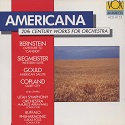
13. Elie Siegmeister – Western Suite: IV. Buckaroo – Siegmeister was an active supporter of the movement to establish an authentic American style in classical music. He wrote a number of books on the subject, notably Treasury of American Song, The Music Lover’s Handbook, and a widely used textbook called Harmony and Melody. His Western Suite was premiered under the baton of Arturo Toscanini in 1945.


14. Roy Harris – Symphony No. 4, “Folksong Symphony” – III. Interlude: Dance Tunes for Strings and Percussion – Roy Harris was born in a log cabin to poor farmers in Oklahoma, a heritage in which he took great pride. Eventually he made contacts in the East and gained the support of Aaron Copland, Nadia Boulanger, Serge Koussevitsky, Arthur Bliss, and Arthur Farwell. Most of his works are inspired by distinctly American subjects.

15. Steve Heitzeg – Death of the Dream: Farmhouse Memories – Minnesota native Steve Heitzeg incorporates environmental elements frequently in his music, including stones, sea glass, and birch bark chimes. The son of dairy farmers, his rural upbringing has had a profound impact on his music, making him the ideal composer for the soundtrack to a public television documentary called Death of the Dream (Farmhouses in the Heartland).

16. Charles Wakefield Cadman – From the Land of the Sky-Blue Water – Another composer associated with the “Indianist” movement, Cadman spent time living with the Omaha and Winnebago tribes in Nebraska, learning their music and instruments. His first success was his song “From the Land of the Sky-Blue Water”, and afterwards he moved to Los Angeles and became a successful film composer.


17. Dimitri Tiomkin – Red River: Birth of Red River D – An immigrant from Russia, Dimitri Tiomkin was one of the premier film composers in the first half of the twentieth century, receiving twenty-two Oscar nominations and winning four of them. He was known best for his scores composed for westerns, including High Noon, starring Gary Cooper, and Red River, starring John Wayne.


18. Richard Rodgers – Oklahoma!: Act II: Oklahoma!; Finale: Oh, What a Beautiful Mornin’ (reprise) – Oklahoma! was the first musical written by famed duo Rodgers and Hammerstein, and it was based on the play Green Grow the Lilacs. A huge success, it ran for an unprecedented 2,212 performances and earned its composers a Pulitzer Prize. In 1955 it was adapted for film, starring Gordon MacRae and Shirley Jones and winning three Oscars for the music and sound.

19. Elmer Bernstein – The Magnificent Seven: Theme – In 1960, director John Sturges remade Akira Kurosawa’s classic film Seven Samurai and set it in the Wild West. It featured stars Yul Brynner and Steve McQueen, and it was scored by Elmer Bernstein. Bernstein’s other film score credits include The Great Escape, Ghostbusters, Airplane!, and To Kill A Mockingbird.


20. Dale Evans – Happy Trails – Dale Evans and her husband Roy Rogers team up on this recording of her timeless tune “Happy Trails”, which was used as a theme song for a radio program and television show the two shared. One interesting fact about this song is that it was recorded by Janis Joplin as a birthday greeting to John Lennon, a gift that didn’t reach him until after she died three days later.


Each month, Naxos Music Library presents a themed playlist for our subscribers to enjoy. We know that a database of over 1.8 million tracks can be a bit daunting, so we'd like to highlight some of the amazing music that is available to you. Let it kickstart discovery!